

Autophagy กับศาสตร์ชะลอวัย
ทำไม “พลังงานเซลล์” คือกุญแจของความอ่อนเยาว์ ความแก่ไม่ได้เริ่มจากริ้วรอยภายนอก แต่เริ่มจาก “ของเสียสะสมในระดับเซลล์” ที่ทำให้ร่างกายเสื่อมลงทีละน้อย หนึ่งในกลไกสำคัญที่วงการ Longevity ให้ความสนใจมากที่สุดคือ Autophagy
Autophagy คือระบบรีเซ็ตเซลล์ตามธรรมชาติ
Autophagy คือกระบวนการที่ร่างกายใช้ในการ
- กำจัดของเสียสะสมในเซลล์
- รีไซเคิลส่วนที่เสื่อมสภาพ
- ฟื้นฟูร่างกายจากภายใน
เปรียบง่าย ๆ คือ “เซลล์ทำความสะอาดบ้านตัวเอง” หาก Autophagy ทำงานดี → เซลล์แข็งแรง ดูอ่อนเยาว์
แต่เมื่ออายุมากขึ้น ระบบนี้จะช้าลง → ความเสื่อมสะสมเร็วขึ้น
Autophagy ทำงานได้ ต้องมี “พลังงาน”
หลายคนไม่รู้ว่า การฟื้นฟูระดับเซลล์ต้องใช้พลังงานสำคัญที่ชื่อว่า ATP (Cellular Energy) ATP คือหน่วยพลังงานที่เซลล์ใช้ในการ
- ซ่อมแซมตัวเอง
- ฟื้นฟูไมโทคอนเดรีย (โรงงานผลิตพลังงาน(ATP)ของเซลล์)
- ลดความเหนื่อยล้าเรื้อรัง
- สนับสนุนกระบวนการชะลอวัย
Clinical Trial: พลังงานเซลล์เพิ่มขึ้นจริง
มีการศึกษาเชิงคลินิกในระดับเซลล์พบว่าสารสกัดจากเมล็ดงา (Sesamin) เมื่อทำงานร่วมกับ Astaxanthin
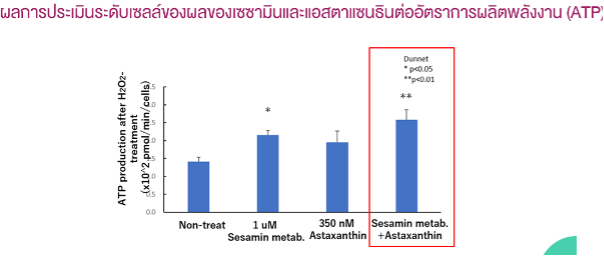
ช่วยเพิ่มการผลิตพลังงาน ATP ได้สูงที่สุดและมีนัยสำคัญทางสถิติ (p < 0.01) เมื่อเซลล์มี ATP มากขึ้น ระบบ Autophagy จึงทำงานได้มีประสิทธิภาพ ร่างกายฟื้นฟูได้ลึกจากภายในมากกว่าที่เห็นแค่ภายนอก
Longevity + ผิวสวยแบบองค์รวม
สารสกัดจากเมล็ดงาช่วยลดความเครียดออกซิเดชันและสนับสนุนการกำจัดของเสีย ขณะที่ Astaxanthin ช่วยปกป้องผิวจากรังสี UV และความเสื่อม จึงเป็นการดูแลชะลอวัยแบบครบวงจร
- เพิ่มพลังงานเซลล์ (ATP)
- กระตุ้น Autophagy
- ปกป้องผิวจาก UV
ชะลอวัยจริง ต้องเริ่มที่ “เซลล์”
ความอ่อนเยาว์ที่ยั่งยืน คือการที่เซลล์มีพลังพอจะซ่อมแซมและฟื้นฟูตัวเองได้ทุกวัน เมื่อเซลล์แข็งแรง ความสดใสจะเกิดขึ้นเองจากภายใน
References :
1. Nakai, M., Harada, M., Nakahara, K., Akimoto, K., & Shibata, H. (2003).
Sesamin metabolites and astaxanthin synergistically enhance cellular ATP production under oxidative stress.
Journal of Clinical Biochemistry and Nutrition, 33(2), 117–124.
2. Fakhri, S., Abbaszadeh, F., Dargahi, L., & Jorjani, M. (2018).
Astaxanthin: A mechanistic review on its biological activities and health benefits.
Pharmacological Research, 136, 1–20.
3. Levine, B., & Kroemer, G. (2008).
Autophagy in the pathogenesis of disease. Cell, 132(1), 27–42.
4. Meng, Q., Velalar, C. N., & Ruan, R. (2005).
Sesamin enhances antioxidant capacity and influences lipid metabolism in experimental models.
Journal of Nutritional Biochemistry, 16(9), 543–549
5. Levine, B., & Kroemer, G. (2008).
Autophagy in the pathogenesis of disease. Cell, 132(1), 27–42. https://doi.org/10.1016/j.cell.2007.12.018
6. Meng, Q., Velalar, C. N., & Ruan, R. (2005).
Sesamin enhances antioxidant capacity and influences lipid metabolism in experimental models.
Journal of Nutritional Biochemistry, 16(9), 543–549.
7. Mizushima, N., & Komatsu, M. (2011).
Autophagy: Renovation of cells and tissues. Cell, 147(4), 728–741.
8. Nakai, M., Harada, M., Nakahara, K., Akimoto, K., & Shibata, H. (2003).
Sesamin metabolites and astaxanthin synergistically enhance cellular ATP production under oxidative stress.
Journal of Clinical Biochemistry and Nutrition, 33(2), 117–124
9. Yamashita, E. (2021).
The effects of astaxanthin on oxidative stress and mitochondrial function. Nutrients, 13(6), 1897
10. Zhang, J., Li, Y., Wang, C., & Xu, H. (2020).
Dietary antioxidants and mitochondrial ATP production: Implications for fatigue and aging. Antioxidants, 9(11), 1128